Sovereign by architecture. Industrial by manufacture.
The container is a unit of scale, not a unit of innovation. Every part is industrial-standard. The moat is in the network, the software, and the customer relationships.
·
·DEFENCE & TELCOS

Bytes routed only through the jurisdiction that owns them.
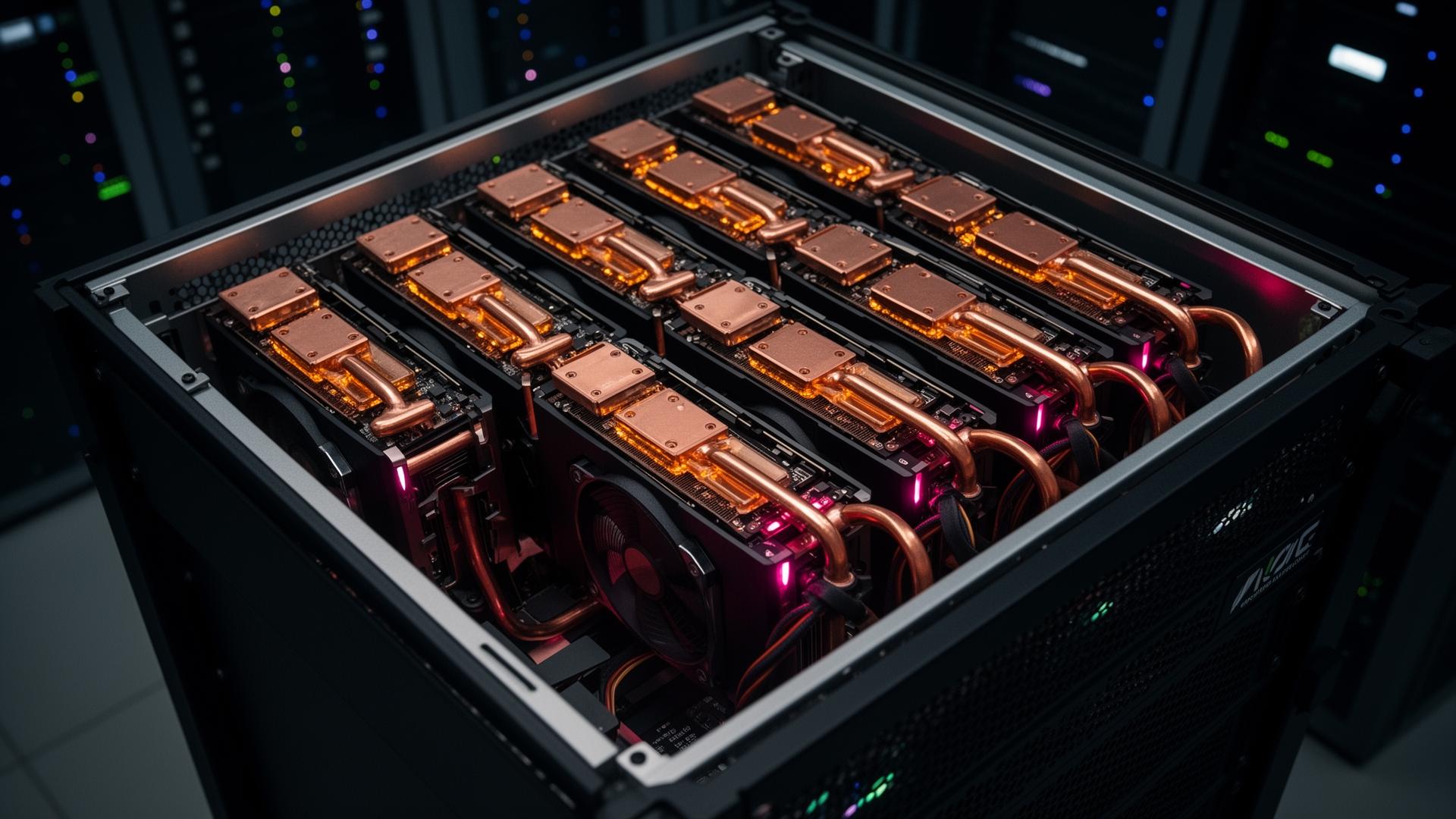
One container. One megawatt.
- IT capacity, design
- 1.0 MW envelope · 8 racks × 120 kW liquid-cooled
- Stage 1 pilot config
- 256 H200-class GPUs (~360 kW utilized)
- Year 5+ configuration
- Up to ~500 GPUs · B200 / B300 · Full 1 MW
- Cooling
- Direct-to-chip liquid + rear-door heat exchangers
- Power source
- Behind-the-meter natural gas (primary) · Grid (secondary) · 48–72hr LNG buffer
- Connectivity
- Redundant fiber + private MPLS · Air-gap operating mode supported
- Software platform
- Federated control plane · Customer-controlled cryptography · Jurisdictional severability
- Deployment time
- 12 weeks site-ready to revenue
- Form factor
- 40-foot ISO-compatible modular data center
Where the real moat lives.
Orchestration that understands jurisdictional constraints. Billing that maps to sovereign procurement cycles. Audit interfaces that regulators can use directly.
Each container’s control plane runs locally. Shared code, not shared runtime.
Customer-held HSM keys gate every workload. Even Rhodium 45 administrators cannot decrypt customer data.
Jurisdictional cutover is a configuration change, not a re-engineering project.
Inference and fine-tuning. Not training.
Training is a winner-take-all market for hyperscalers with 100,000+ GPU clusters. Inference and fine-tuning are the addressable, growing, sovereign-bound markets — and they fit distributed architecture far better than centralized training does.
| Training | Inference | Fine-Tuning | |
|---|---|---|---|
| Cluster scale | 10k–100k+ GPUs | 1–8 GPUs / request | 8–256 GPUs |
| Latency | Weeks / months | Sub-second | Hours / days |
| Data residency | Sometimes binding | Often legally required | Almost always required |
| Distributed fit | Poor | Excellent | Excellent |
| Rhodium 45 mix | 0% | 50–80% | 20–40% |
From enquiry to production in four defined steps.
Enquiry
Quote form or 20-min briefing. Reply within 2 business days under NDA.
Scoping
Workload, jurisdiction, power and timeline mapped. Indicative proposal within 10 days.
Contract
Executed under your jurisdiction, through your incumbent SI or framework where possible.
Deployment
Site-ready to production inference in approximately 12 weeks.